


Preparing for and managing a cold weather power outage
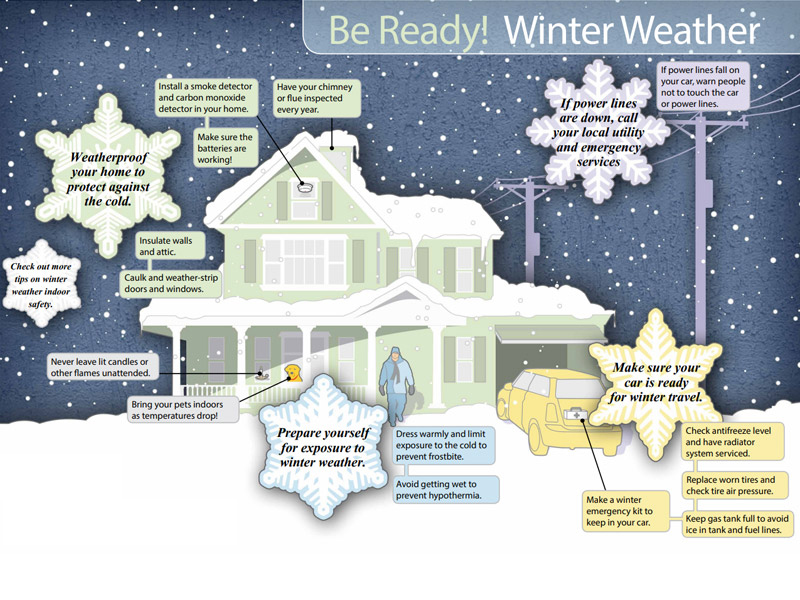
Protect yourself and your loved ones during a winter storm power outage.
Plan ahead:
Make sure your automobile has plenty of fuel.
If you have a portable generator, conduct a test run to make sure it is in working order before you need it. Make sure you have a working carbon monoxide detector and cords large enough to handle the loads you intend to run. Make sure cords are long enough to ensure the generator can be operated at a safe distance away from your home.
Keep all devices fully charged and have extra batteries or power packs on hand.
Have hand/foot warmers available.
Know where your community's warming stations are located. Call 211 if you need help locating one. Know what the facility's rules are before you leave home.
Fill all available thermoses with hot liquids. Replenish them every 12 hours to ensure you have something hot to consume should the power go out. You can also use the thermos as a heat source when tucked into a sleeping bag or under blankets.
Make a plan for pets.
If you have a fireplace or woodstove, make sure you have an available source of dry wood or firelogs.
Heat your home safely:
When using any non-electric heat source or generator it is critically important that your home be equipped with a working carbon monoxide detector.
If you plan to use a wood stove, fireplace, or space heater, follow the manufacturer's instructions. For example, portable propane or kerosene heaters require that you provide fresh air ventilation by opening a nearby window. If you intend to use a kerosene heater it is imperative that you use a separate fuel can that is clearly marked "kerosene" to avoid the disastrous mistake of refueling the unit with gasoline.
Never use a grill, hibachi or camping stove indoors.
While you may retreat to your vehicle to keep warm or recharge battery powered devices, never leave the motor running when parked in an enclosed or partially enclosed space like a garage. Make sure the vehicle's exhaust is not covered by snow.
Be sure you layer clothing to retain body heat.
Move your family to one room to huddle together until power is restored. Select a small room that does not have an exterior wall. If that's not an option, find a south-facing room that will allow sunlight to heat the room during the day.
Know the signs of hypothermia:
Hypothermia (abnormally low body temperature) is a dangerous condition that can happen when a person is exposed to extremely cold temperatures.
In adults, warning signs of hypothermia include:
- Shivering
- Exhaustion or feeling very tired
- Confusion
- Fumbling hands
- Memory loss
- Slurred speech
- Drowsiness
In babies, signs include bright red, cold skin, and very low energy.
Seek medical attention immediately if body temperature drops below 95°.